I was sat on the roof when they asked me. The ground was piled with Berber tapestries and the sheep’s wool scratched at my shins. The sepia flare of the sun was slowly dying off, and the Saharan breeze was setting in, tingling the salted edges of my forearms. Dusk waded in, its mystic siege infused with the percussion in the distance - the reliable rhythm of the drum, the twang of the Ginbri, the flourishes of the Taghanimt, their ritual binding, a calling for Eid. The “Festival of Sacrifice”, Eid ul-Adha, was drawing to a triumphant close, and so was my time here. The stars sequined the horizon, their glow humble against the still-feverish sun. By the time the sky had been spilled with rich blue and the sea was freckled with warm moonlight, melting into the mosaic of buildings, their carved-out windows alight with an ochre luminescence, I had made my decision. I would go with them, I’d travel North.
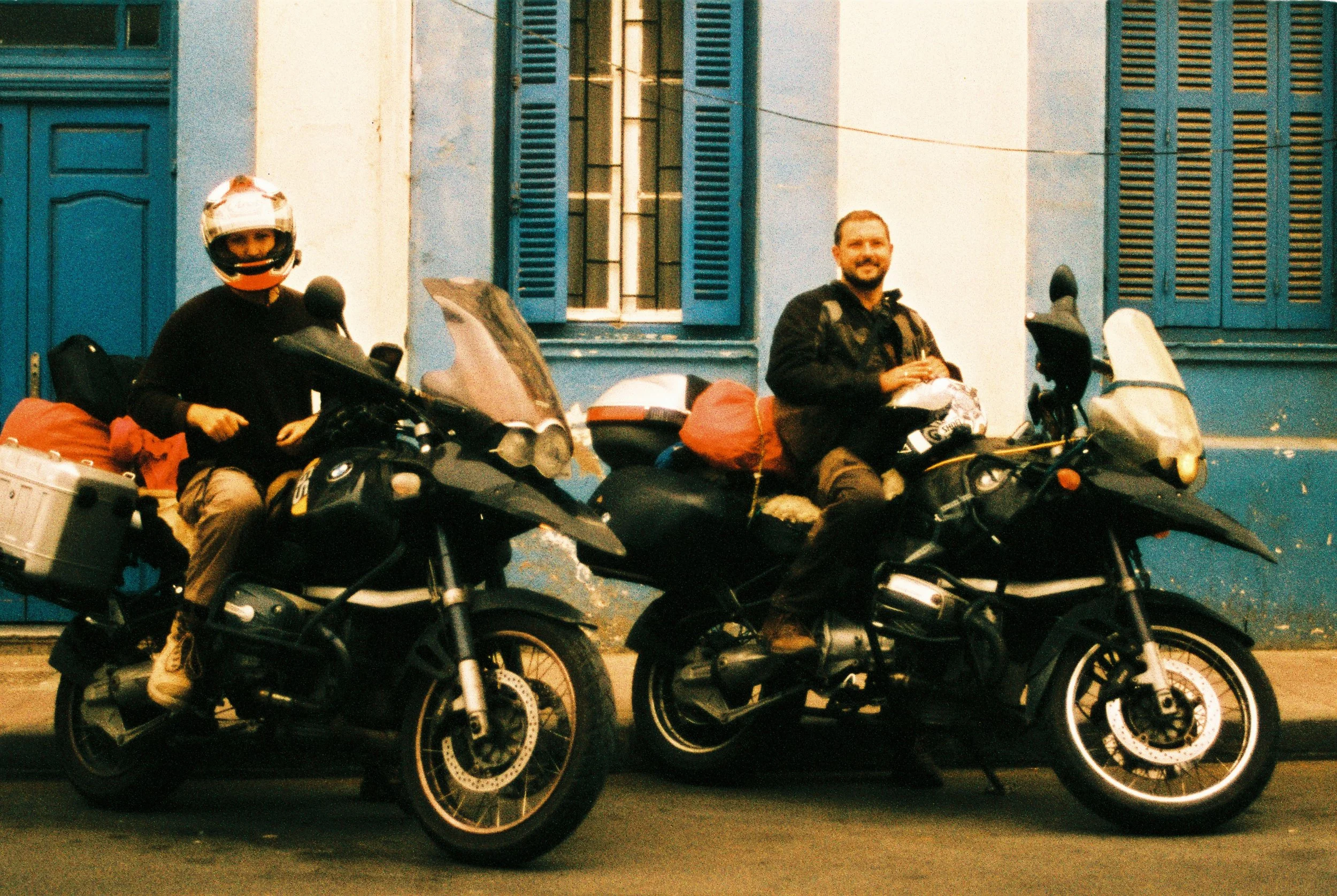
I stood at the base of the slender building, surveying the morning as it spread above, filling the gaps between the tops of the buildings with a cement-like smog. The straps of the canvas bag that I had bartered for in the fluorescent panic of the corner shop at midnight, now welded into my hot palms as I wait. I’d become accustomed to winding myself in a tangerine scarf that I’d exhumed from a lurid mesh knot in the medina. Now it was snuggled around my film camera, alongside a swimsuit, still-damp, a bleached box of cigarettes, underwear and a toothbrush, all clumsily wedged against the flimsy canvas. I observed Cam’s process as he disguised the leather body of the bike in a cloak of sheepskin, before compressing my belongings to its tail, the bloated fabric synched by elastic cords.
Cam and Rolly had become very familiar to me in the preceding week. Their voices soundtrack these shards of memory as I float in images of Taghazout. The misty bay embracing the incoming surfers, the rabbles of goats loitering amongst the taxi rank, the frosted brown jars of Casablanca beer laying circular lattices on the bar barrels, bodies suspended in mid-air at the skate park, their wooden planks colliding. As I remember, these flickering impressions are woven together with the soothing intonations of their voices.
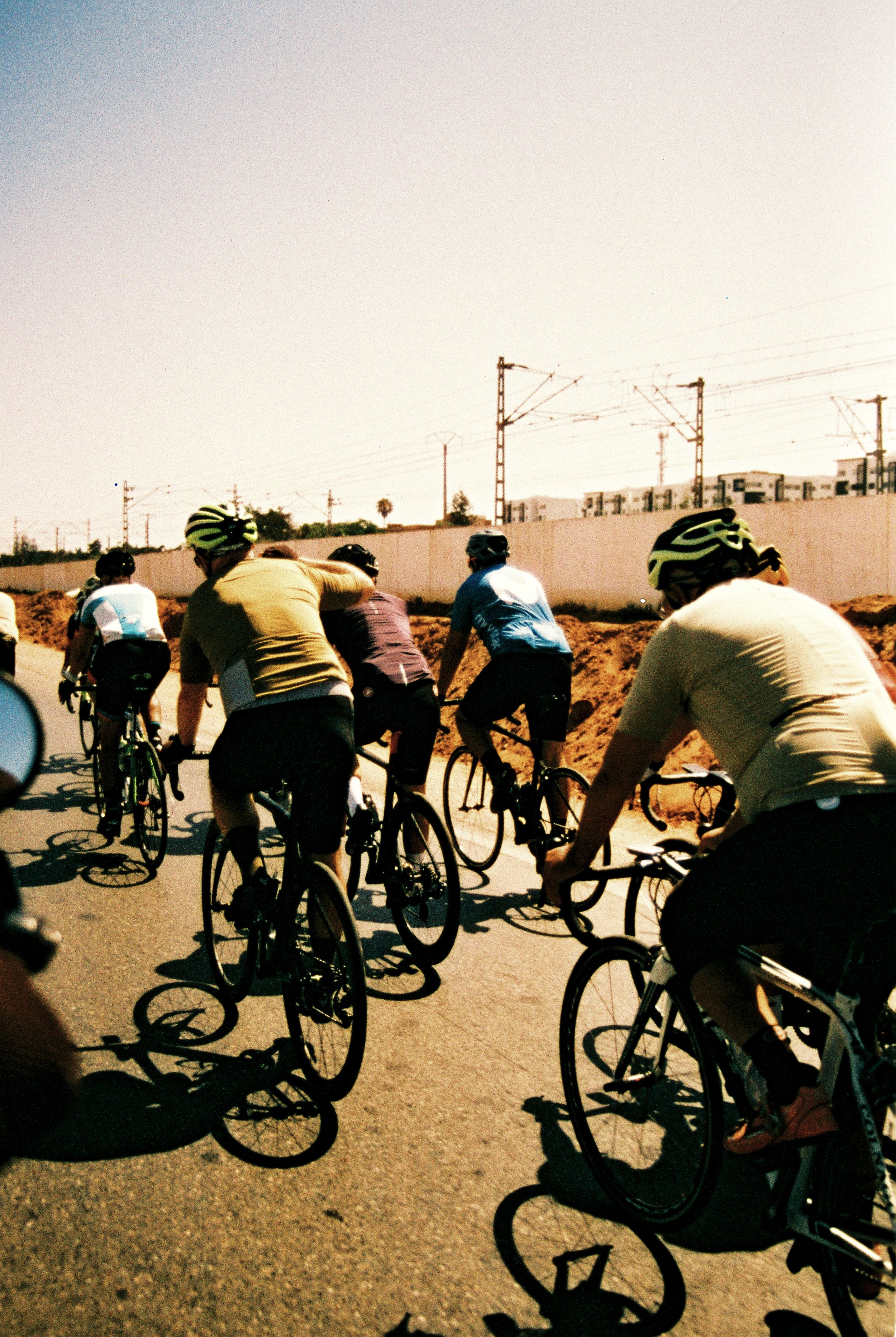
Cam swivelled his head to look at me. I saw myself in the psychedelic visor of his helmet, suddenly reminded of what I had agreed to. “Ready?”, I nodded, the bike snarled and jerked, faded to a purr, and with an unexpected weightlessness, we drifted forwards. This procedure became familiar. The tyres scrubbed the tarmac beneath and produced the lingering smell of burning asphalt which stalked us for the next 900 kilometres. The winds coaxed my hair into a taut nest at the nape of my neck. Like a magic trick, the beating sun could not be felt while on the move, and then we’d pause, and we’d suddenly feel its rapture; it had been there all the while. As we slowed into Essaouira on the first evening, my shoulders were swollen, and my head fizzed with sunstroke. I quickly learnt to cover up whilst on the road.
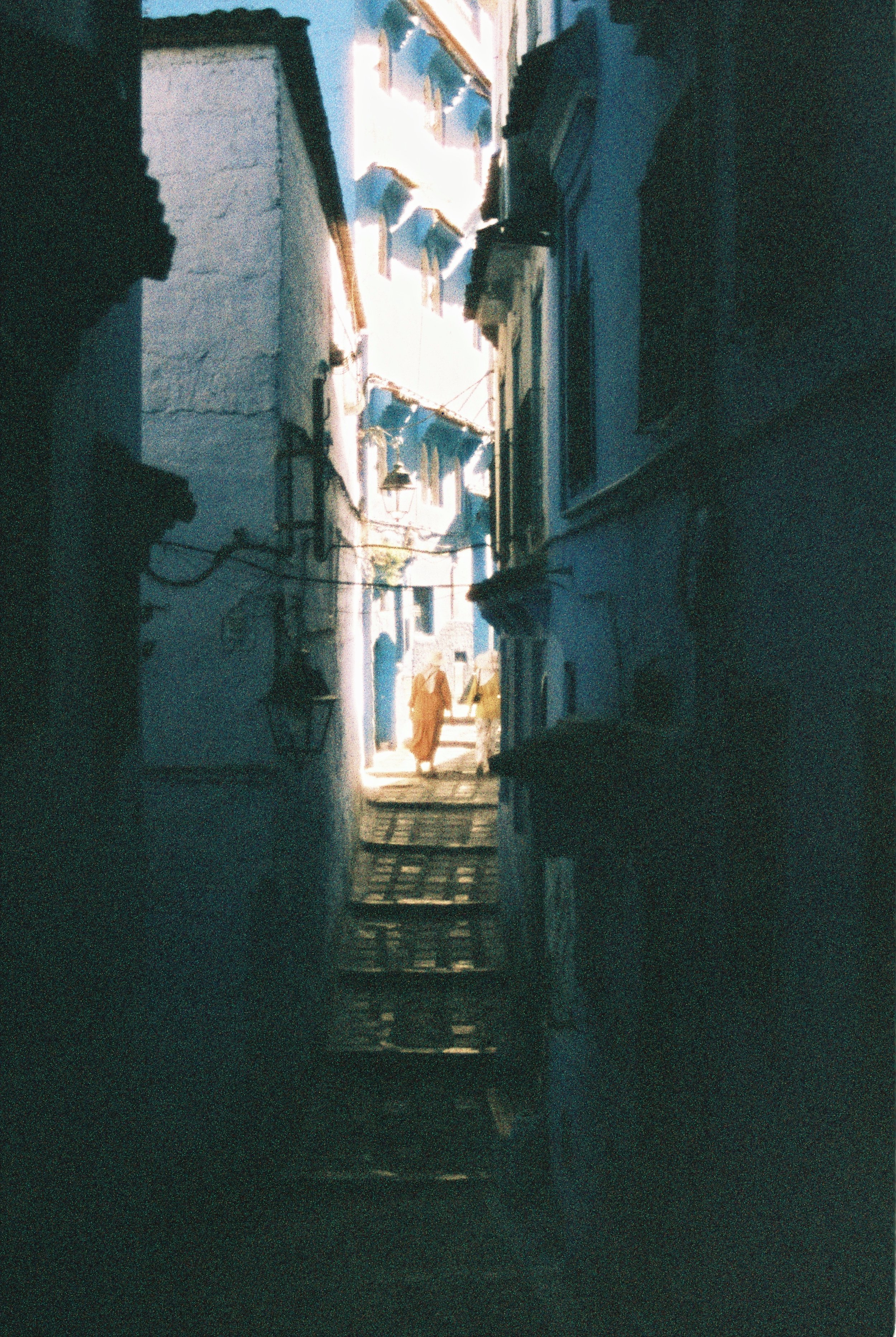
Essaouira reverberated with the anticipation of festival. This is a city which lies below the sea, its treasure gilded by the burly city wall. It is a labyrinth of tunnels illuminated by an ember glow. It is a network of shy streets, interconnected as though eaten away at by termites. The passages are lined with unassuming doorways, summoning passersby with wafts of gently spiced tagines and charred batbout. I had been here before, arriving from a remote village where women were placed in the home, and I had felt simultaneously unseen and a spectacle. An honest sunset lured me to the outskirts of the city on the evening I first arrived. Hordes of people clambered atop the bolsters of concrete which made up the seawalls, each with their eye fastened upon the quickly disappearing sun. Seagulls oscillated above, mimicking the give and take of the ocean. An elderly man leaned his bike against the wall, clasping the granite with both hands, gazing out at the uninterrupted panorama. I wondered how many times he had watched the sun fall from this position. There is something primal to me about the gathering of people to watch a sunset – an esoteric union of strangers. We watched together and my nerves softened as the sun melted and became the sea.
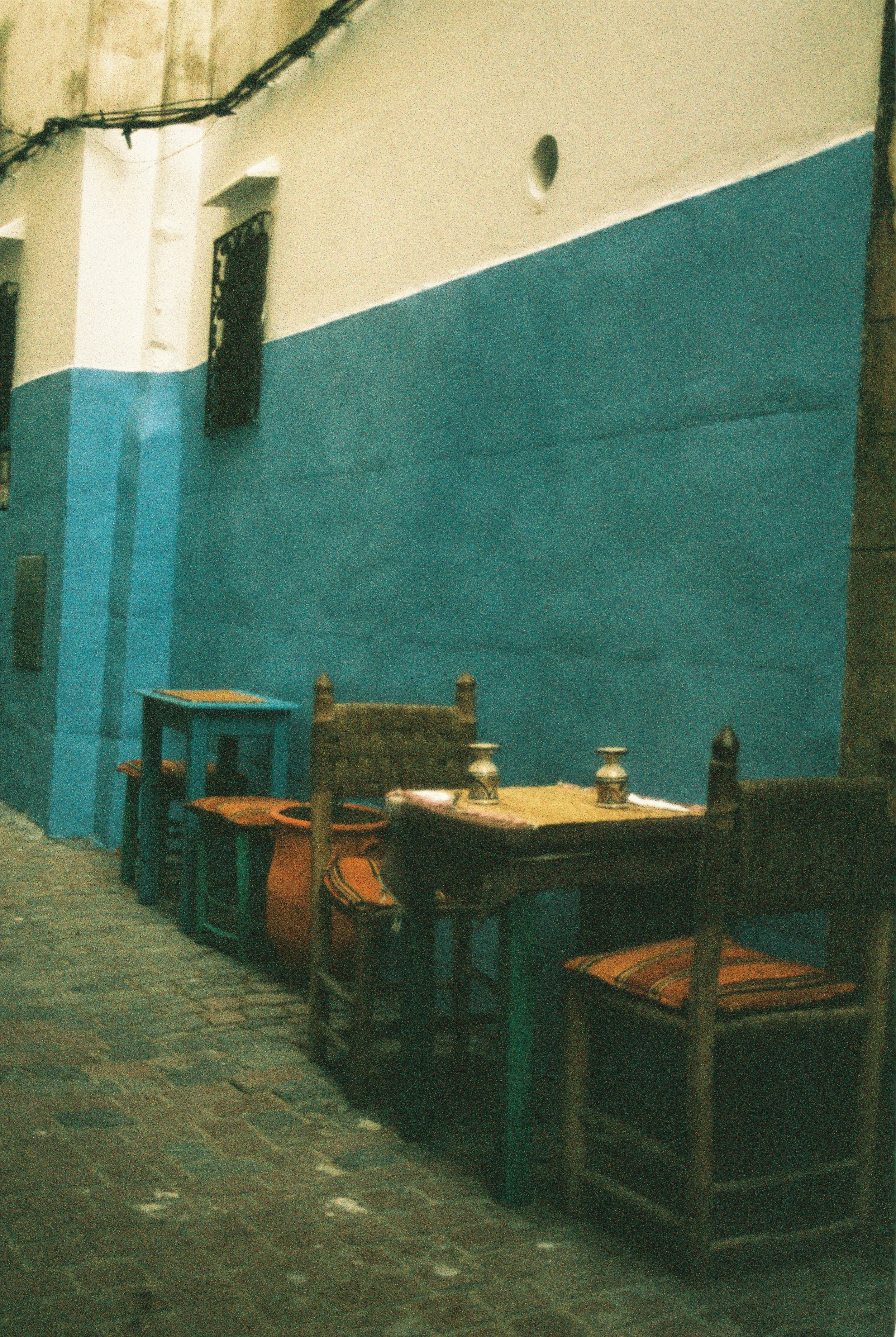
Naturally, I found myself in the safe arms of Essaouira again. I funnelled through its familiar roads, my stomach heavy with hunger. Up the palm-lined promenade, towards the port, meandering through crowds in the main street. The pavement was decorated with glittering trinkets, woven bags and replica shoes, wheeled carts cradling fuchsia pomegranates, synthetic looking oranges, prickly pears, and metallic tables encrusted with oysters and sardines. I withdrew into the backstreets, detangling my way to a restaurant that I came to before. In an alley, pasted in Chefchaouen-blue, I had been tempted into the empty restaurant by the earnest smile of the owner. He had lowered a blackened pot onto the wicker table mat. Inside, tender white fish bathed in tomato and caramelised onions – the local tagine de poison. I scooped generous doses of the sweet sauce onto soft bread. New combinations of spices fizzed on my tongue becoming familiar hints of flavour – cinnamon, cumin, paprika, mint, saffron. I was reminded of the richness of my grandma’s Sicilian cooking. These moments spent eating alone became significant to me. In the absence of phone connection or chatter, I could indulge more whole-heartedly in this temporary joy.
Belly full, I reunited with Cam and Rolly at a neon bar on the promenade, overlooking the main beach. A small TV hung in the corner, drawing people into an awkward cluster, their faces tinted blue, and their voices flickering. White and blue fragments fluttered across the screen, quickening, colliding, and the voices swelled, louder. Tension tightened through the room as England faced Slovenia in the Euros. I looked towards the beach. The expanse of sand was stained with the watermark of high tide. The game drew to a close. We intermittently filled each other’s glasses with red wine and puffed at cheap cigarettes, prodding each other for stories. We spoke and spoke until all the football fans had left, the tension had subsided, and the tide tucked us in.
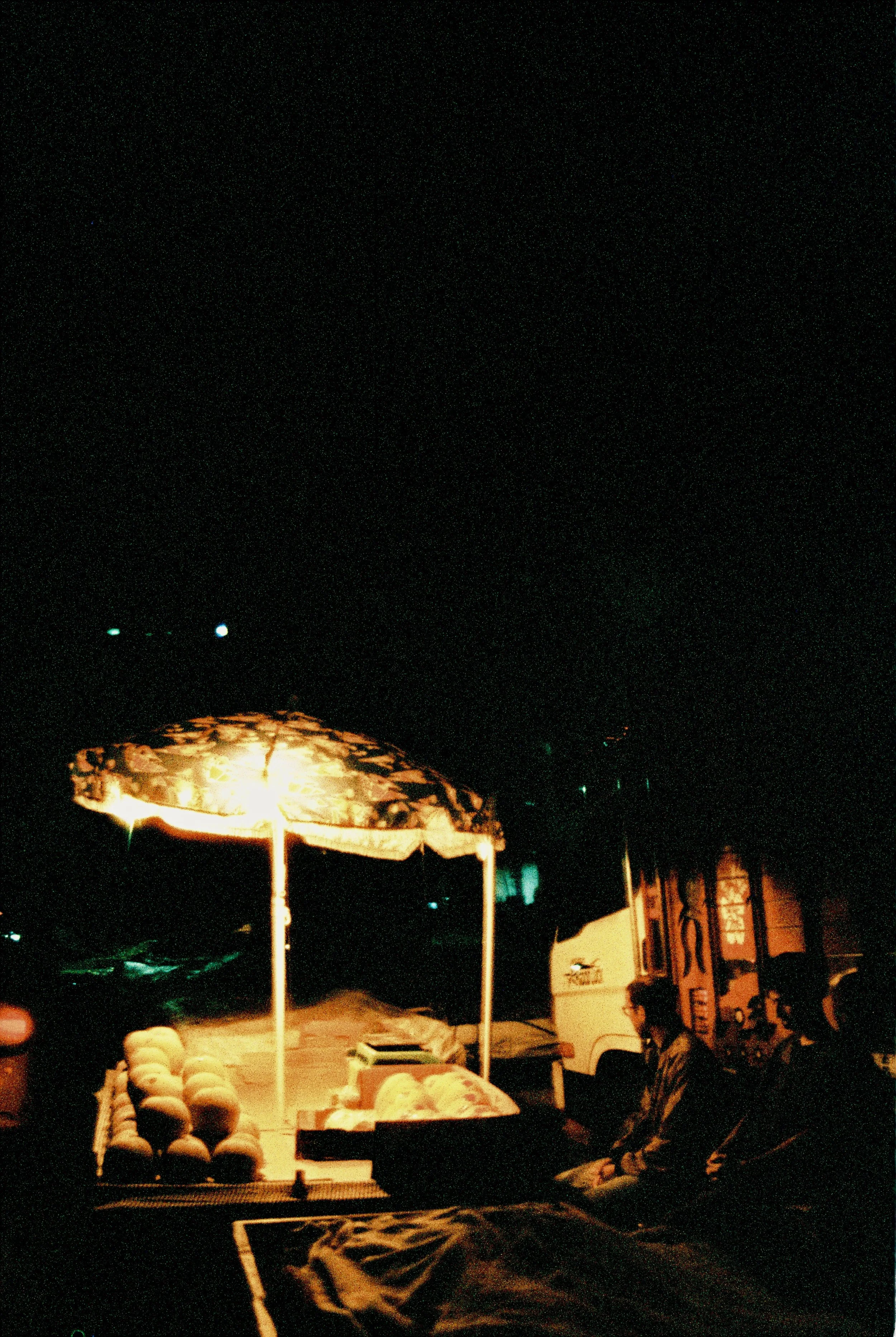
By Dhuhur, the noon call to prayer, we had travelled far north of Essaouira. We happened upon Had Hrara, a small town just beyond Safi, which packed itself into a scarce five-hundred metre stretch of road. People were few upon our entrance and exit, but within, Had Hrara was roaring with chatter and sellers naming their price. Items were being hauled up and down the road – kids with school bags, donkeys with carts exploding with mint, men with nets bulging with canary melons. I imagined the trade-offs that might be going on around me. A bunch of mint in exchange for some dates, argan for saffron, a clay pot for a lantern, a rug for tiles. The legacy of Morocco’s geographical position, as a long-standing ancient trade route, connecting Europe, Africa and the Middle East, remains. The symbiosis between the people and the land is demonstrated by the constant exchange of goods, from one hand to another. Communities, like Had Hrara, are deeply interconnected in this way – as a crossing point, and the cultural currency was playing out on the street and all around me.
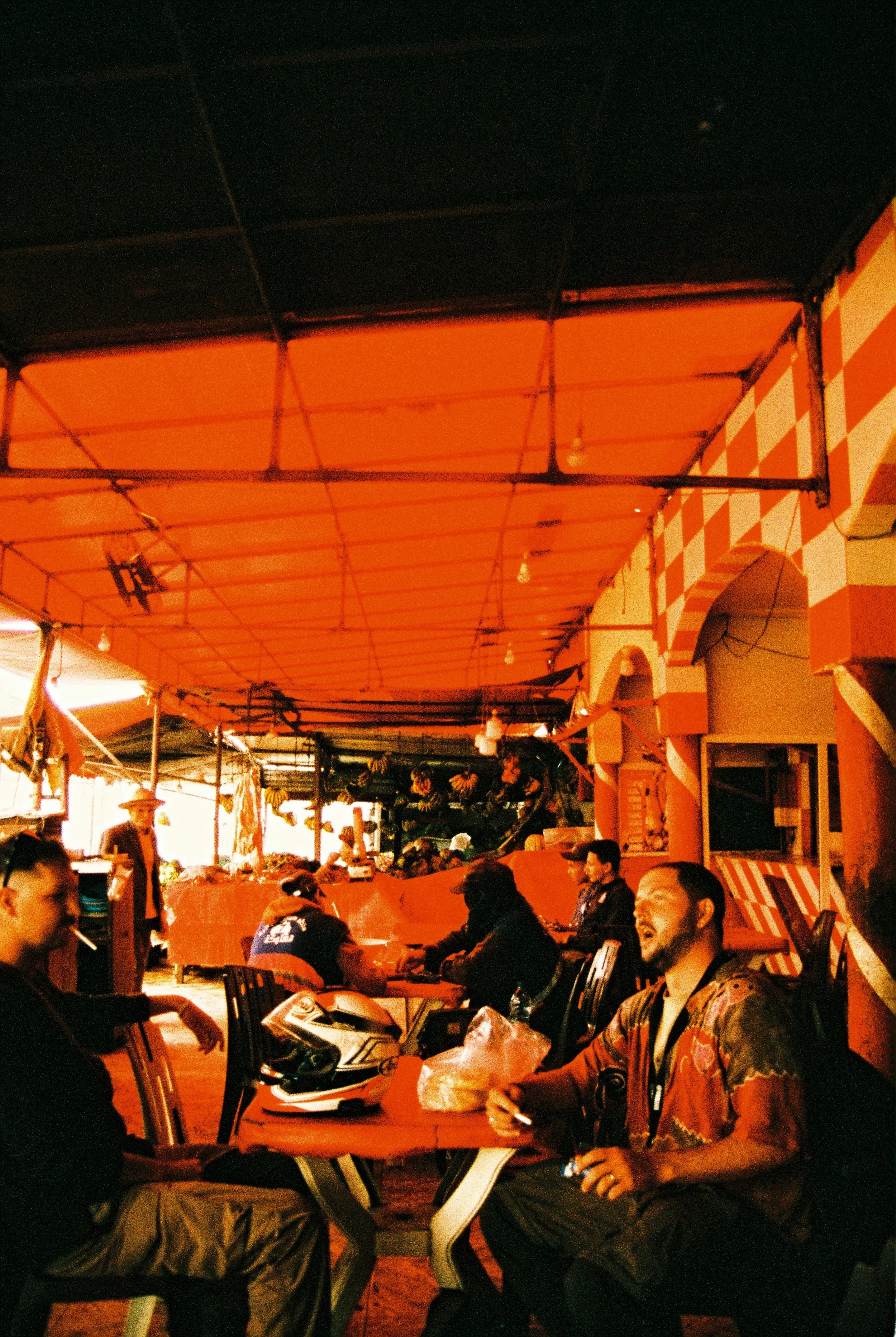
Edging onto the road was a red umbrella catching the rising fumes from the grill below. Beneath, sardines, imprisoned in wire racks, arranged top to tail and crusted with coarse salt, were tossed upon the grill, singed until their scales were golden and griddled, and their eyes white, then offered to us on metal plates with generous slabs of khubz (Moroccan bread). I plunged the fish into the tin crater of Aleppo pepper sauce in the middle of the table, then fiddled with the flaking meat, plucking thread-like bones through my lips, licking my oily fingers and wiping the greasy residue on the paper tablecloth as I went – an unglamorous and carnal task. Once we had finished, the table looked as though it had been ravaged by the strays – bones sucked clean and discarded. I held up my greasy palms, guilty, and the guy manning the grill, the waiter-come-chef, pointed towards an empty paint bucket beside a water bottle – a tap! And so, we continued north, stinking of fish.
Then I tasted acid on my tongue. Pillars of concrete stood paralysed ahead, coughing up smoke. The alarming smog of the SAFIEC power station awaited our arrival as we edged closer towards its reddish haze. Bicycle skeletons studded the pavement, and workers in fluorescent uniforms assembled in packs, giggling and exhaling cigarette smoke, which coiled and rose, accumulating in the overhanging cloud. In my head, these lyrics chimed, “We can’t go over it. We can’t go under it. Oh no! We’ve got to go through it!” And so, we did, we went through the cloud of smoke and were spat out in a strange bay. The beach here was unlike the neat, crescent-shaped inlets of Taghazout and Essaouira. A large sand bank intruded upon the bay, ascending from the blue, and jagged edges of rock shoved themselves into the raving waters. Still fishermen found their place upon the crag, their rods suspended in the foam. Behind, their loyal boats waited upon the shore, each with its own name. And in-between the sleeping boats and the water, ran a channel of beach, peppered with parasols and bodies blanketed in linen clothing. We watched the scene for a while, taking in oysters and donuts, only a quid each, and occasionally braving a plunge in the manic sea. That night, we fell asleep watching Casablanca, anticipating our arrival the following day.
Casablanca felt nothing like Michael Curtiz’ vision of the city, where Moroccans feature in the peripheries as waiters, musicians and scenery. The film subdues the city to become a smoky, exotic, backdrop for European intrigue – in reality, during the early forties, Casablanca was a site of colonial domination, racial segregation, and fierce anti-colonial resistance. The city began as a modest Atlantic port, before the French arrived and rapidly rebuilt it into the beating heart of their colonial project—new ports, railways, boulevards, and factories rising alongside rigidly planned European and Moroccan quarters. Industrialisation pulled thousands of Moroccan workers into the city, and with them came strikes, underground networks, and a growing culture of resistance. From the first invasion in 1907 to the massacres of 1947, the city simmered with unrest: labour movements clashed with colonial power, Mohammed V was exiled, and dense neighbourhoods became centres of militant organising and quiet rebellion. While the city burned with political tension, Casablanca the film was made during the war, turning this volatile meeting point of empires into a fantasy—real story of resistance, violence, and awakening is left offscreen.
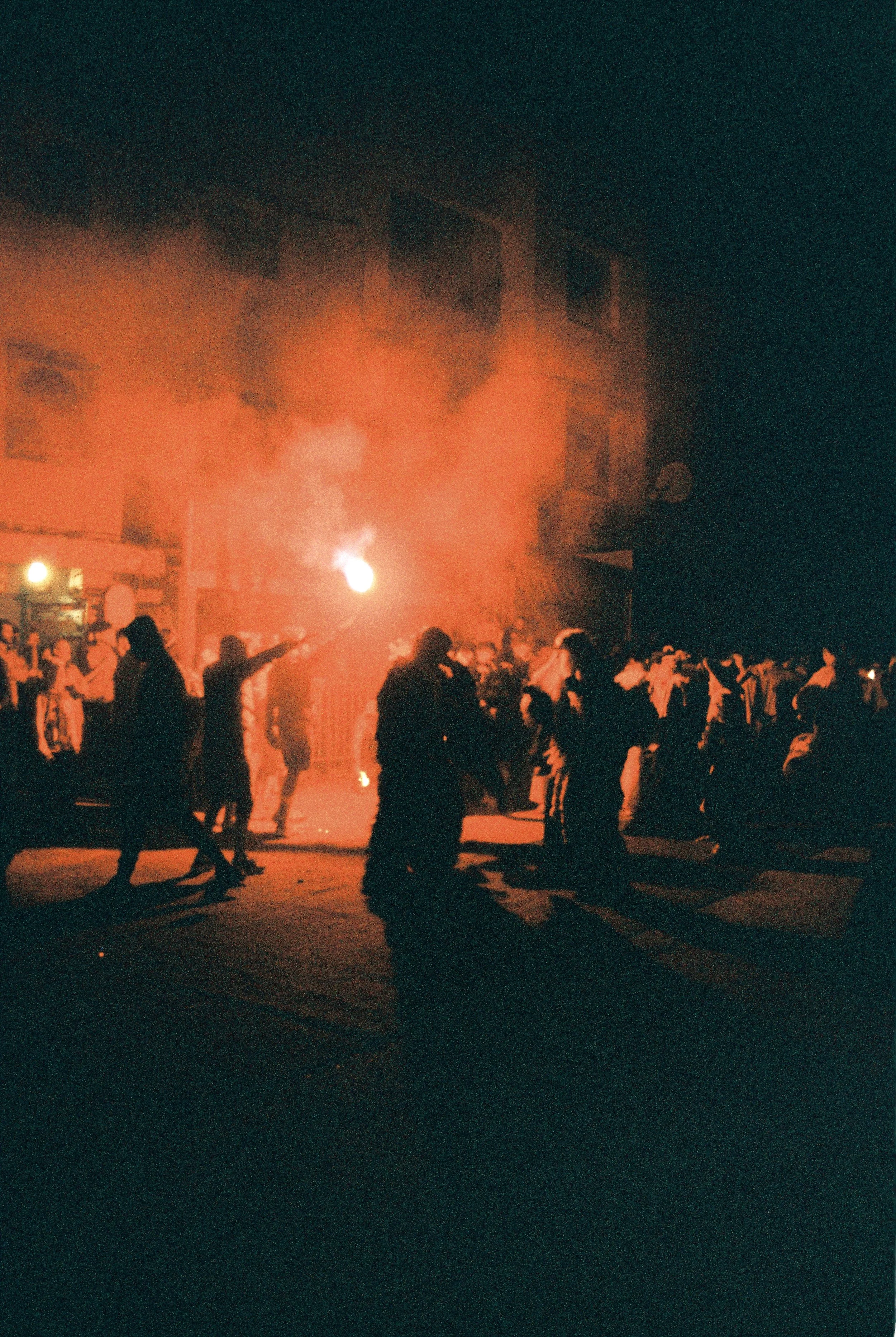
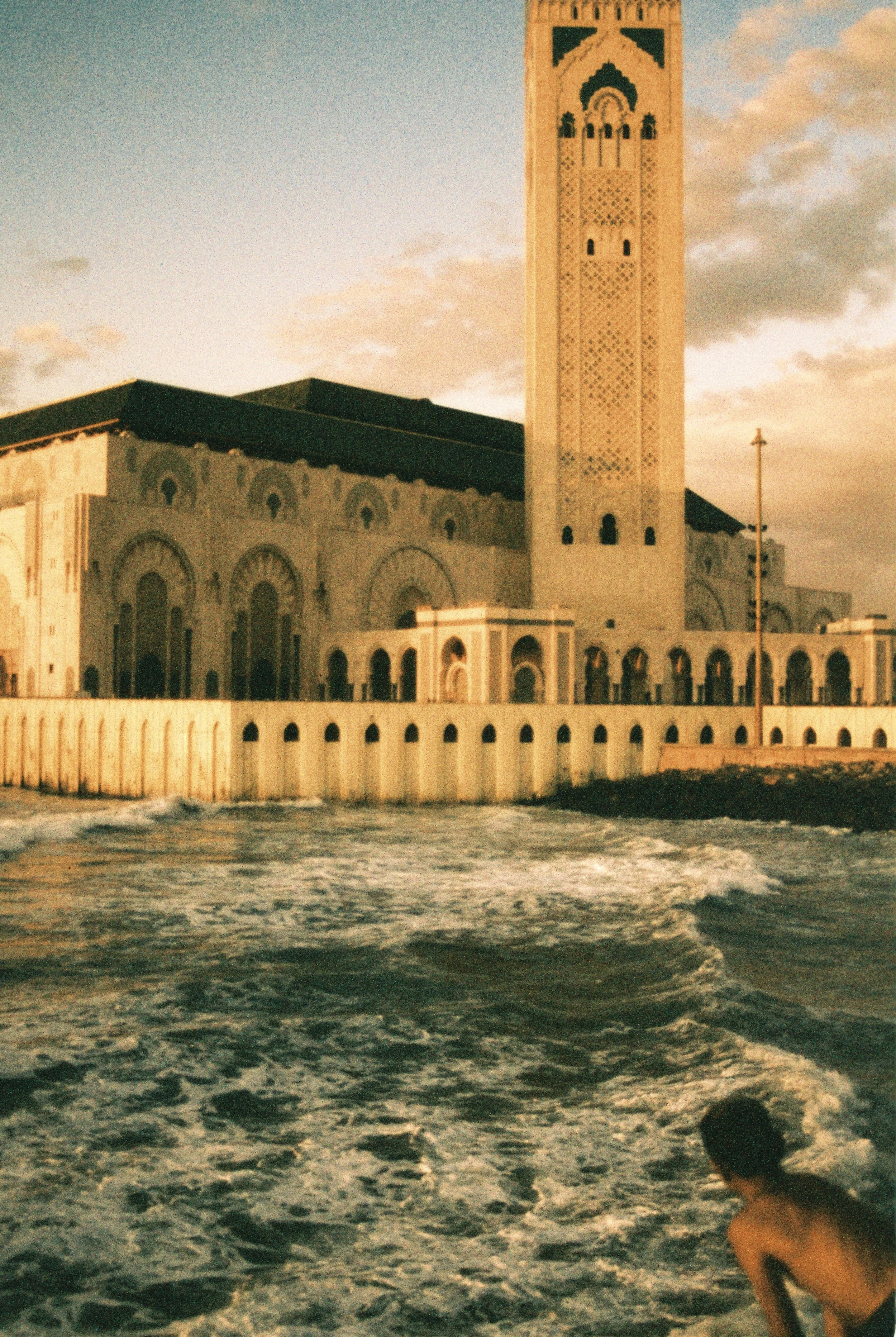
Modern Casablanca carries its history in layers. Built over Anfa—a Phoenician and Roman trading post—it has always been shaped by movement, trade, and the Atlantic edge. The French remade it in their image, carving boulevards and European districts into the city while sidelining indigenous neighbourhoods and bending the land itself, leaving ecological and social scars that still linger. French remains the language of power and commerce, a quiet reminder of who once designed the city. Yet Casablanca has never been fixed: it has absorbed invasions, reconstruction, colonial rule, and independence, emerging tougher and more cosmopolitan each time. The Hassan II Mosque, rising out of the ocean, feels like a declaration of endurance—spiritual, architectural, and defiant—while the emptied former cathedral, now a cultural centre, stands as a hollowed relic of colonial authority. Today, resistance finds new forms: in art, in the streets, and in football, where Wydad red and Raja green ignite the city, carrying forward a tradition of collective identity, rivalry, and refusal to be silenced.
We were chased out of Casablanca by an angry van driver, who edged into our lane until the bike’s wheel teetered on the motorway’s edge. Soon we were held hostage by unmoving traffic, sucking in the fumes of standstill. The bikes were neither sleek nor subtle, but growling metal monsters with the mindset of trucks, announcing our arrival long before we reached the town limits. I felt embarrassment as we paraded through streets and small towns, a strange, anonymous, goggled creature with two faces and a hulking metal body. Sometimes we met people head-on—perched in the backs of pickup trucks—staring at us as if we were some peculiar animals. What a sight we must have been.
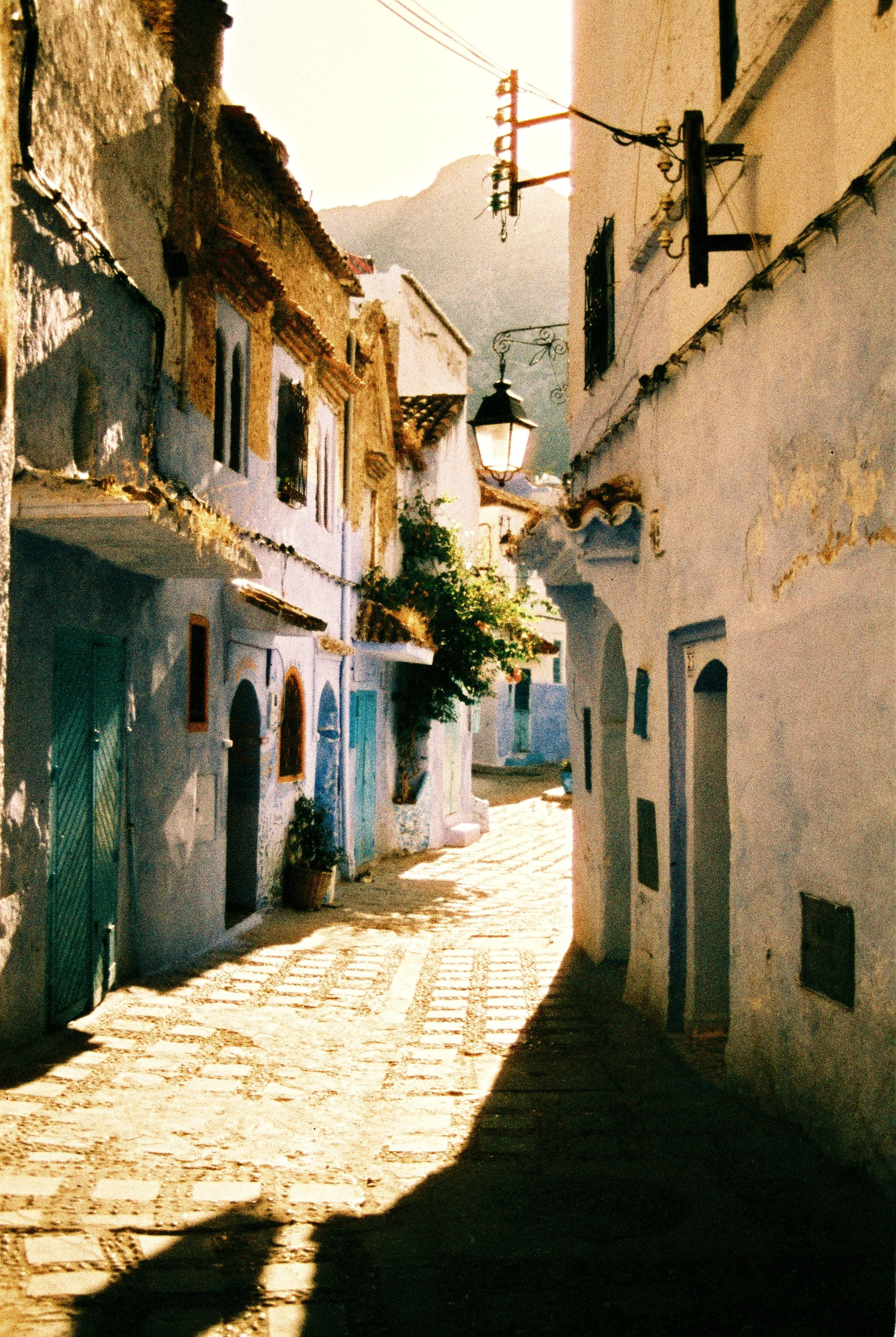
Before leaving them in Tangier, I asked Rolly to take a photo of Cam and I on the bikes. A few months later, when the photo was developed, you could almost make out the road—but Rolly’s thumb had erased us completely. There’s no proof I was there; sometimes I wonder if it even happened. I left Cam and Rolly to cross into Spain, and I climbed the cliffs to Chefchaouen, the city painted blue by Jewish immigrants during WWII, to feel closer to God. A few days later, I bought a twenty-pound plane ticket and flew from Tangier to Agadir, collapsing our 900km journey into one hour.
Clocks have been adjusted and today the air hangs undecided, anticipating the premature descending of dusk. Stapleton Road is already dancing with conversation. The perfume of bitter coffee exhales through open doors, and plastic cups of syrupy orange juice have been arranged on the stall on the corner, ready to zap lethargic passersby. Arriving home with the slowness of October, I sit at my desk, close my eyes, and I look out at Tagazhout bay. I find myself here often. My fingertips upon the sand, massaging its grainy surface. I claw into the earth, clogging my fingernails and finding a rock. These are my memories of Morocco. Artefacts I’ve delivered home, laid upon my bedside table, now cold and displaced from the heat of the equator.
It all feels untouchable now. I would like to remember what it’s like to gaze at the sun until I see red dots and to feel it beat upon my blistered back. I’d like to pluck flakes from my burnt scalp. To churn in the waves and to swallow the salt. To sip sweet tea with newfound friends and to sleep in a bunk beneath a stranger. To suck fatty meat off my fingers and to communicate with hands and smiles. To go with such speed that I feel like I’ve left my body behind, and to slice the quick air with my palms. Then to be summoned to stillness each evening by the call to prayer, to be moved by the splendour of the setting sun and to reflect on an existence so wonderful, in Morocco.